
Why Custom Hangar Door Operators Matter More Than You Think

When planning an aircraft hangar door, most of the attention naturally goes to the door itself. Opening dimensions, panel configuration, structural requirements, wind loads, and door type are all major decisions. But the system responsible for actually moving that door deserves just as much consideration.
A hangar door operator is not simply a motor attached after the rest of the system has been designed. Door size, weight, configuration, operating frequency, facility layout, environmental conditions, and long-term maintenance requirements can all influence how the operator should be designed and integrated.
That is why Well Bilt Industries designs and manufactures its own hangar door operator systems. Instead of treating the operator as a generic accessory, Well Bilt can engineer the door and its operating system to work together from the beginning.
For aviation, military, industrial, marine, and other demanding facilities, that approach can make a significant difference in how smoothly, reliably, and efficiently a large door performs throughout its service life.
The Operator Has to Match the Door It Is Moving
Large hangar doors are not one-size-fits-all systems. A multi-panel bottom rolling door operates very differently from a bifold or single-panel hydraulic door, and even two rolling doors can have dramatically different requirements depending on their dimensions, panel configuration, weight, and facility.
The operator needs to account for those differences.
An operator that is poorly matched to the door can create inconsistent movement, unnecessary stress on components, and additional maintenance concerns. A properly engineered system is designed around the forces required to move the actual door while maintaining controlled operation throughout its travel.
Well Bilt takes this relationship into account by manufacturing its operator systems in-house. Its Hercul-Eze traction-drive operators have been developed specifically for hangar door applications, allowing the operator configuration to be selected around the door rather than forcing a large custom door to work with an unrelated off-the-shelf solution.
Real-world projects demonstrate why that matters. For an 80-foot-wide by 30-foot-tall rolling door built for the Chicago Yacht Club, Well Bilt configured the five-panel system with two Hercul-Eze 250 Series operators. Operator placement and configuration were selected specifically around how that particular door needed to move.
The result is a more complete approach to hangar door engineering: the structure, panels, movement, controls, and operators are considered parts of one operating system.

In-House Engineering Creates Better System Integration
One of the advantages of designing the operator alongside the hangar door is greater control over how the entire system works together.
Well Bilt designs and manufactures its own operator systems, including Hercul-Eze and ZEUS systems. That gives its team the ability to consider operator performance during the door-design process rather than relying on a third-party component after the major engineering decisions have already been made.
Integration becomes especially important with large rolling systems. The operator has to move the door consistently while maintaining proper engagement and controlled movement across the panels. The drive system, wheels, tracks, controls, electrical components, and door structure all contribute to the finished system’s performance.
Well Bilt’s operator technology has also evolved alongside its doors. Hercul-Eze traces its history to the company’s early operator designs and has continued to develop as hangar door requirements have changed.
For facility owners, this means the conversation is not simply about choosing a motor with enough power. The goal is to create a complete system in which the operator’s configuration and controls support the way the door was engineered to move.
The Right Operator Can Improve Long-Term Reliability
A hangar door may cycle thousands of times throughout its working life. Every opening and closing places demands on the operator and the components responsible for transferring that movement through the door system.
That makes long-term reliability an important part of operator selection.
Well Bilt recently documented a customer replacing original Hercul-Eze operators after more than 20 years of service. Instead of waiting for a complete failure, the facility upgraded to the current-generation system to modernize the door while maintaining the existing structure.
The newer Hercul-Eze system incorporates updates intended to improve drive efficiency, load management, torque delivery, movement control, electrical reliability, and long-term serviceability. Because the existing door already used Hercul-Eze equipment, the new operators could be integrated as part of a relatively straightforward modernization process.
That case also demonstrates why the operator should be considered over the entire lifecycle of the hangar door. Facilities change. Components age. Controls improve. Operational requirements evolve. An operator system designed with serviceability and future modernization in mind can give facility owners more options than a system built around difficult-to-source or poorly matched components.
Choosing the right operator at the beginning is therefore about more than making the door move today. It is about creating a system that can continue to be supported as the facility’s needs change.
Engineer the Right Hangar Door Operator for Your Facility
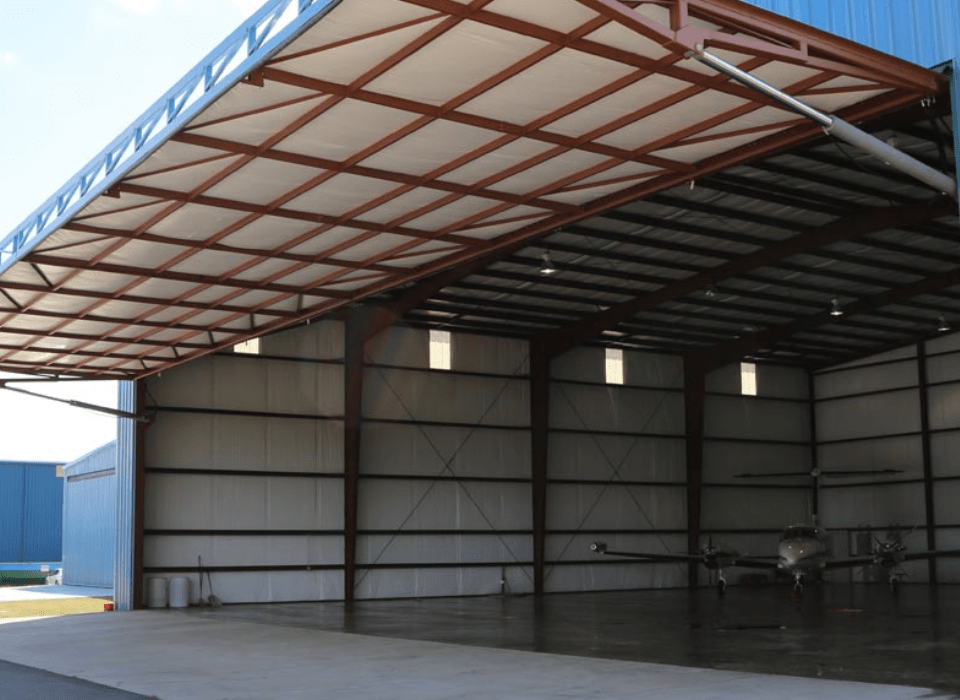
Your hangar door operator should not be an afterthought. It should be engineered around the size, configuration, operating demands, and long-term needs of the door it is responsible for moving.
Well Bilt Industries designs and manufactures custom hangar door systems and operator solutions for aviation, military, industrial, marine, and specialty facilities nationwide. From new Hercul-Eze and ZEUS systems to operator upgrades and complete hangar door modernizations, our team can evaluate the requirements of your facility and develop a solution built around the application.
Whether you are planning a new hangar door, replacing aging operators, or determining whether an existing system can be retrofitted, contact Well Bilt Industries to discuss your project and get an engineered recommendation.