
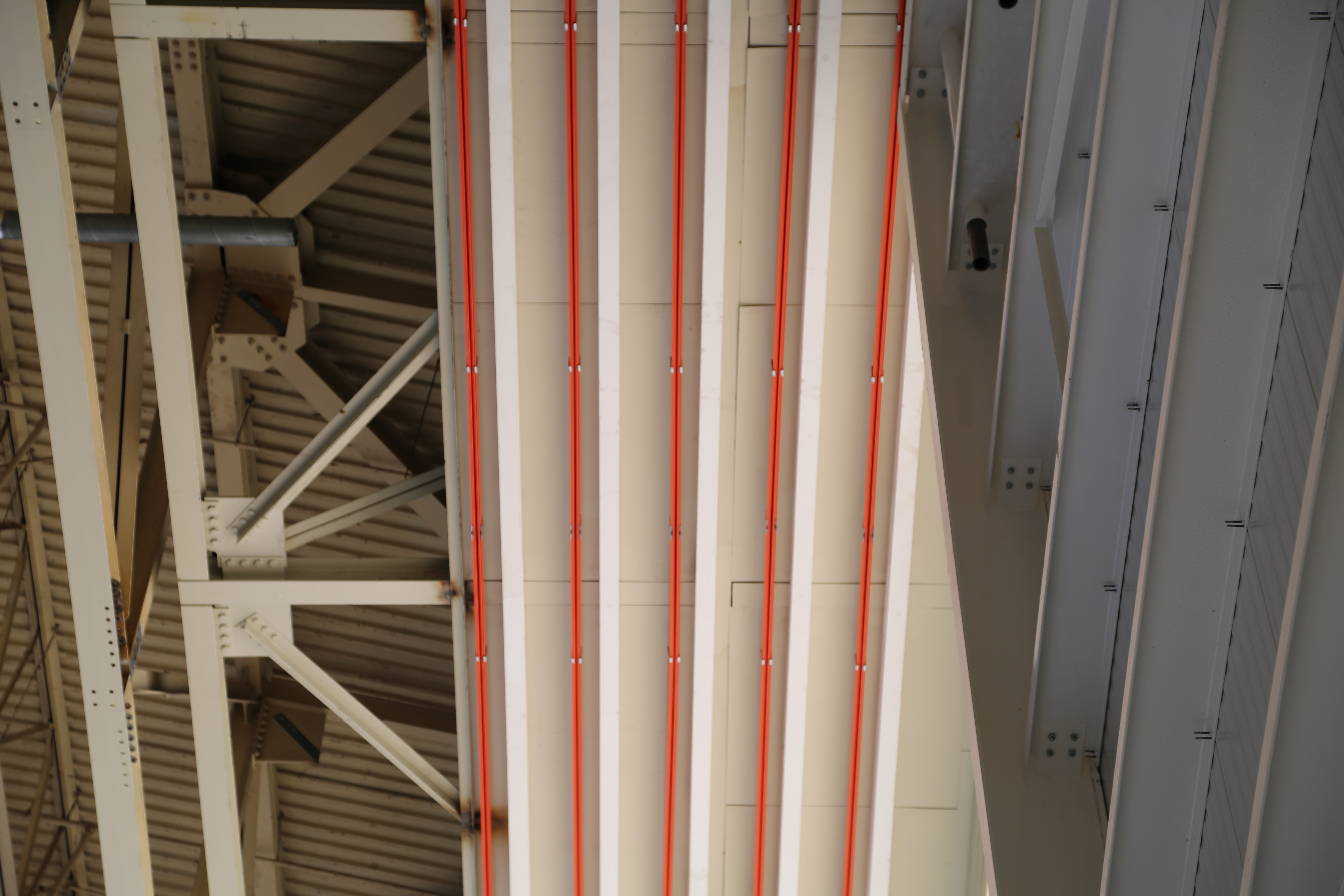
Routine maintenance is critical to protecting the investment you’ve made in a hangar door system. Whether operating a hydraulic, sliding, or bi-fold system, properly caring for mechanical and structural components ensures long-term reliability, reduces repair costs, and improves safety. At Well Bilt Industries, our team has developed proven maintenance strategies based on decades of experience to help our clients keep their doors operating at peak performance.
The exterior coating on your hangar door is the first line of defense against corrosion, especially in environments where humidity, salt, and UV exposure are high. Well Bilt doors are coated using a metal prep process and durable primers, but regular inspections remain essential. Every few months, it’s important to walk the perimeter of the door and check for any signs of chipped paint, rust spots, or surface wear—particularly around high-contact areas. Addressing surface damage early with proper touch-up paint prevents rust from compromising structural integrity.
Edge seals and weather brushes do more than keep dust and debris out—they also maintain interior climate control and energy efficiency. Over time, these components can become brittle or compressed due to environmental exposure and daily operation. We recommend inspecting the seals and brushes at least every other month. If they show signs of cracking or uneven wear, replacing them with UV-resistant materials such as EPDM rubber can restore the door’s protective performance and help prevent moisture intrusion.
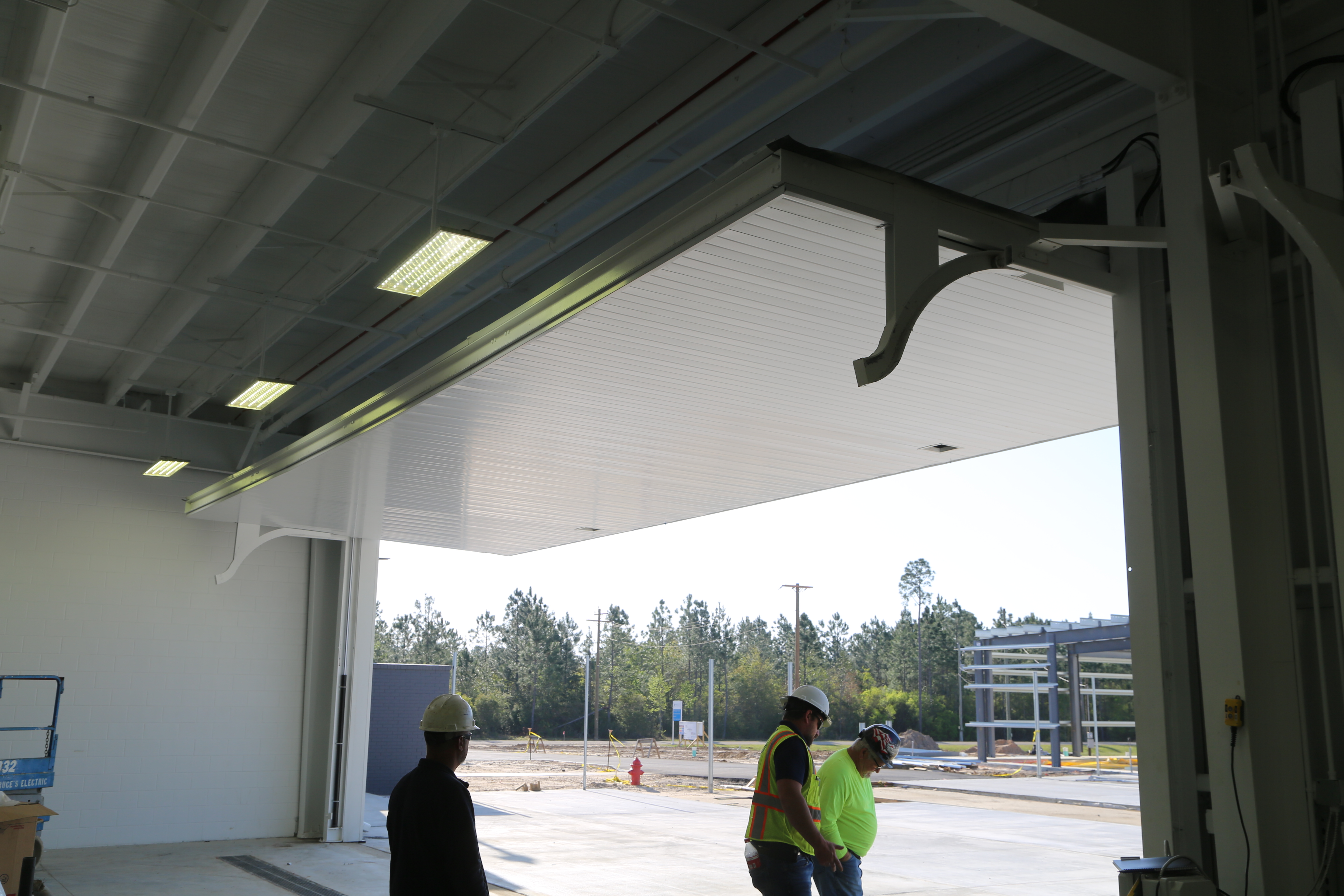
Hangar doors include a variety of moving parts—from hinges and bearings to rollers and tracks—all of which benefit from proper lubrication. Using a manufacturer-approved grease or lubricant, clean and reapply lubrication to these components regularly to reduce friction and minimize wear. Even sealed bearings, such as those used in bottom-rolling door systems, should be inspected twice per year. Tracks should remain free of grit and debris, and zerk fittings should be greased as part of an annual maintenance routine. Neglecting lubrication can lead to unnecessary strain on motors and structural components, shortening the life of the entire system.
For motorized systems, functioning brakes are essential to prevent uncontrolled movement. Monthly brake inspections help ensure the door can safely hold position. In bi-fold doors, cable integrity is vital; inspecting for fraying, corrosion, or uneven tension every six months can prevent serious system failure. Hydraulic door systems should also be routinely checked for proper fluid levels and seal condition. If any hydraulic cylinder shows signs of leakage or pressure loss, immediate attention from a qualified technician is recommended to avoid further damage or safety risks.
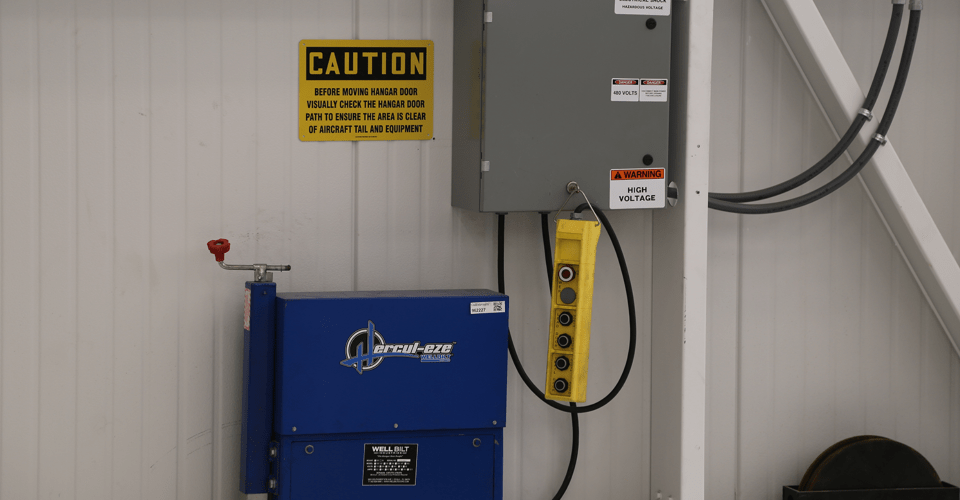
Hangar doors equipped with automated or smart systems require additional electrical checks. At least once a year, inspect control panels, wiring, and safety systems, including limit switches and auto-reverse sensors. Ensure that all emergency stop features function correctly and that connections remain tight and free from corrosion. A malfunction in these systems can impact not just performance but also personnel safety and facility compliance with operational standards.
While many maintenance steps can be completed in-house, a professional inspection at least once per year adds an extra layer of assurance. Certified technicians can assess system alignment, hydraulic pressure, automation diagnostics, and structural health in ways that standard checklists may miss. These proactive reviews often uncover minor issues before they escalate into costly repairs or downtime.
Investing time and effort into hangar door maintenance delivers significant returns. Proper care improves safety, extends the door’s functional lifespan, and reduces the likelihood of emergency service calls. Well-maintained doors also protect interior assets from the elements and support energy efficiency. For facility managers, staying ahead of wear and tear means lower operating costs and more reliable performance during critical operations.

About the Author
Mark MacDonald
Mark MacDonald, a University of Mississippi graduate, is the Owner and CEO of Well Bilt Industries, a leader in aircraft hangar door manufacturing for nearly 40 years. Under his leadership, the company has expanded from bottom rolling hangar doors to include bifold and single panel hydraulic doors. Mark’s focus on quality has propelled WELL BILT into agriculture, marine, industrial, and residential markets, with all products manufactured using high-quality steel and UL-listed parts at their Ocala, Florida facility.