

 Which hangar door operator is the best?
Rubber Tire Operators vs. Steel Wheel Operators, not an age-old question.
The questions seem to come up with many people, “why would we want to use a rubber tire operator?”, “why do you sell them?”, and the most often, “what works best?” First let’s start with, “what are you trying to accomplish?” The goal is to move the door without the aid of a tow tractor or by pushing it manually. This is the most common reason and frankly, we cannot think of another reason to have a motorized operation for a hangar door. There are several renditions, or variations of electric operators and most function by the use of an electric squirrel cage motor, gear reduction, and chain to drive a wheel. The main difference is that the wheel is either steel or rubber. Both accomplish the same task and both are tried and true. However, to answer the question, “which is better for MY hangar door?” we have to look at all of the factors for your specific project at hand.
So we approach the question from many angles, the one I ask a lot is, “why does the military specify steel wheel?” The answer is simple, the military is not quick to change any of the specification in the design guides they publish. In general military personnel are trained to not ask questions or question their superiors. This has created the use of other products to be shelved. Well Bilt has the rubber tire friction drive units in military facilities in hopes to get the attention of the specifying personnel to look at the product, however, we have found that there is still a hard sell when it comes to specifying the operator, as change does not come easy. To illustrate this better, the NAVFAC, or Naval Facilities Engineering Command still specifies paints and finish products that are no longer in production and some that contain lead.
Why don’t other manufactures have the hangar door operator? Well, the truth is they do. Norco Universal Door Systems sells a Door Wheeler that has many of the same attributes as the Hercul-Eze® Hangar Door Operator. The main difference is Norco does not have an “In the Door” solution to the operator. So they try and get the sale up front. Door Engineering and AeroDoor are trying to offer products to compete, however, the robust engineering and quality of construction makes it hard for the competitors to produce a product as good as the Hercul-Eze® Hangar Door Operator. When it comes to having a superior product with years of tried and true operation, nothing compares to the Hercul-Eze® and its outstanding warranty.
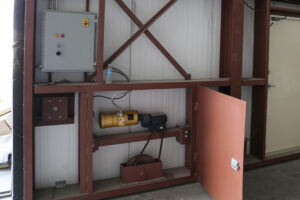
The Well Bilt Hercul-Eze® Hangar Door Operators come in sizes ranging from the 200 to 500 series capable of operating 80,000 LBS with a single drive unit.
HERCULEZE Hangar Door Operators have been around a decades. Well Bilt pioneered the “In the Door” operator and patented the system. Over the years the Well Bilt Operator has taken on new looks as well as updated controls, however, the robust design has made this operator last for generations.

About the Author
Mark MacDonald
Mark MacDonald, a University of Mississippi graduate, is the Owner and CEO of Well Bilt Industries, a leader in aircraft hangar door manufacturing for nearly 40 years. Under his leadership, the company has expanded from bottom rolling hangar doors to include bifold and single panel hydraulic doors. Mark’s focus on quality has propelled WELL BILT into agriculture, marine, industrial, and residential markets, with all products manufactured using high-quality steel and UL-listed parts at their Ocala, Florida facility.