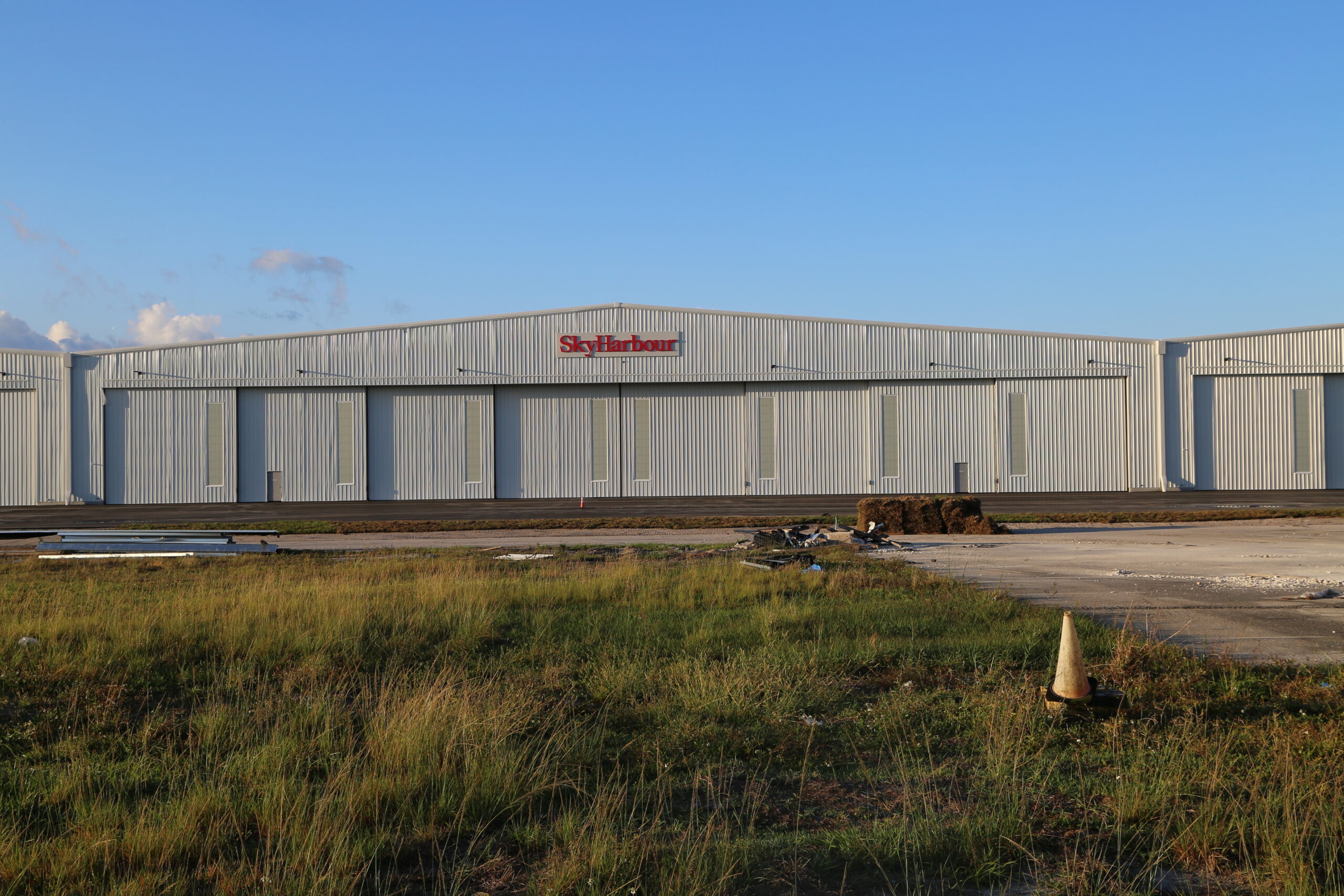
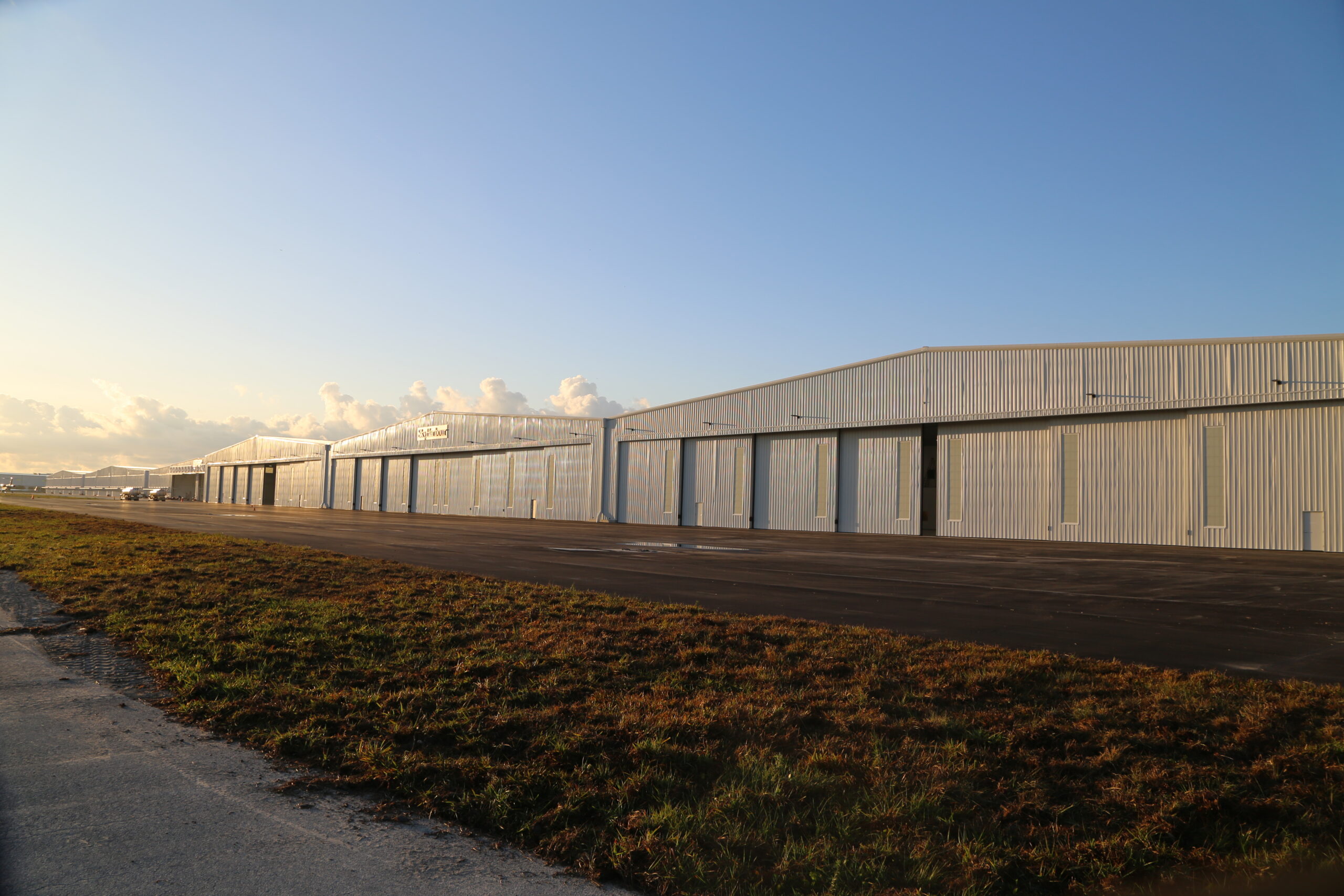
Opa-Locka Airport in Miami continues to see rapid growth in aviation infrastructure, and our team is proud to support that expansion with the completion of multiple rolling hangar door installations for both Sky Harbour and Skybridge. These projects highlight our ability to deliver custom-engineered bi-parting rolling hangar door systems designed for smooth horizontal movement, operational flexibility, and long-term performance in demanding aviation environments.
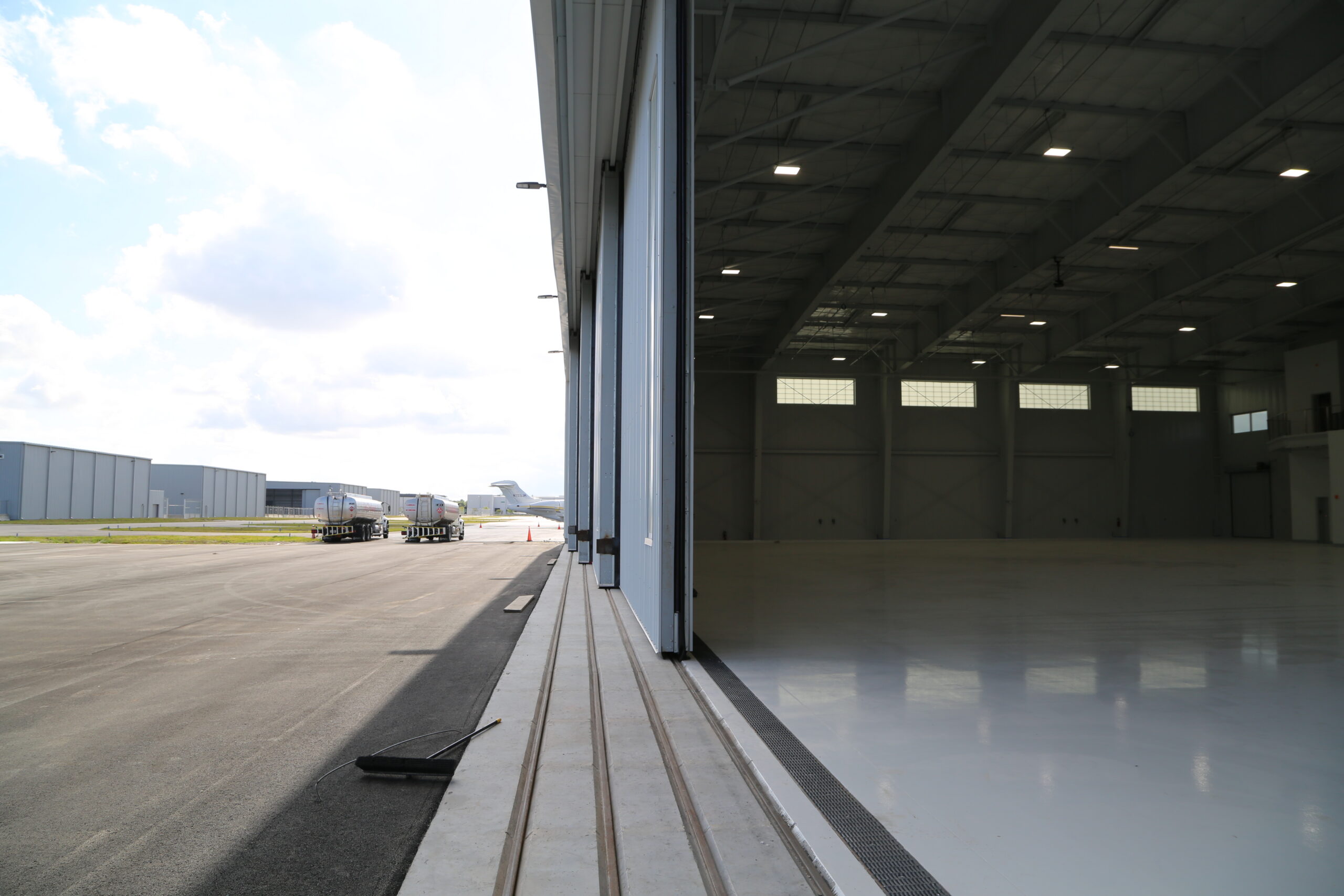
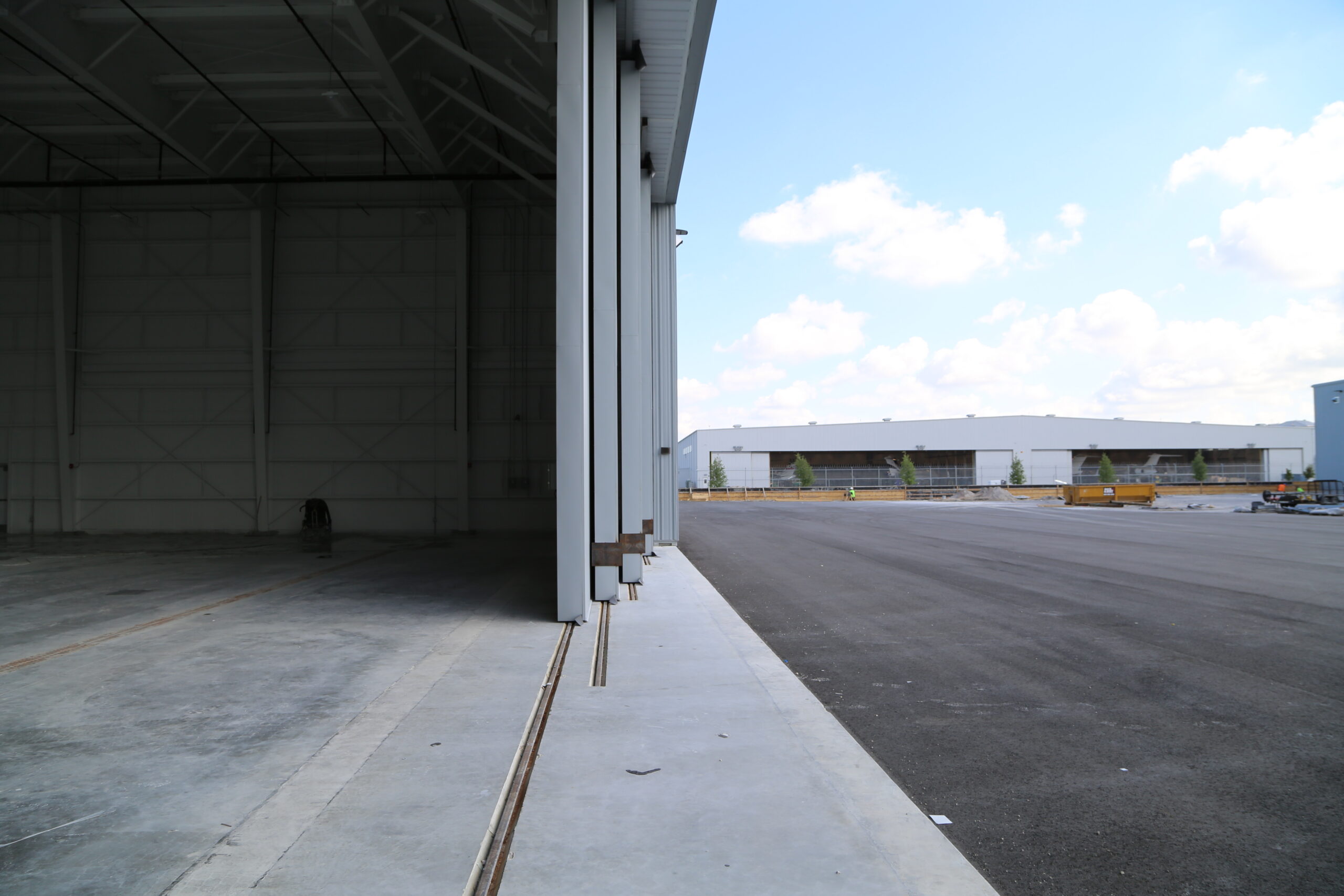
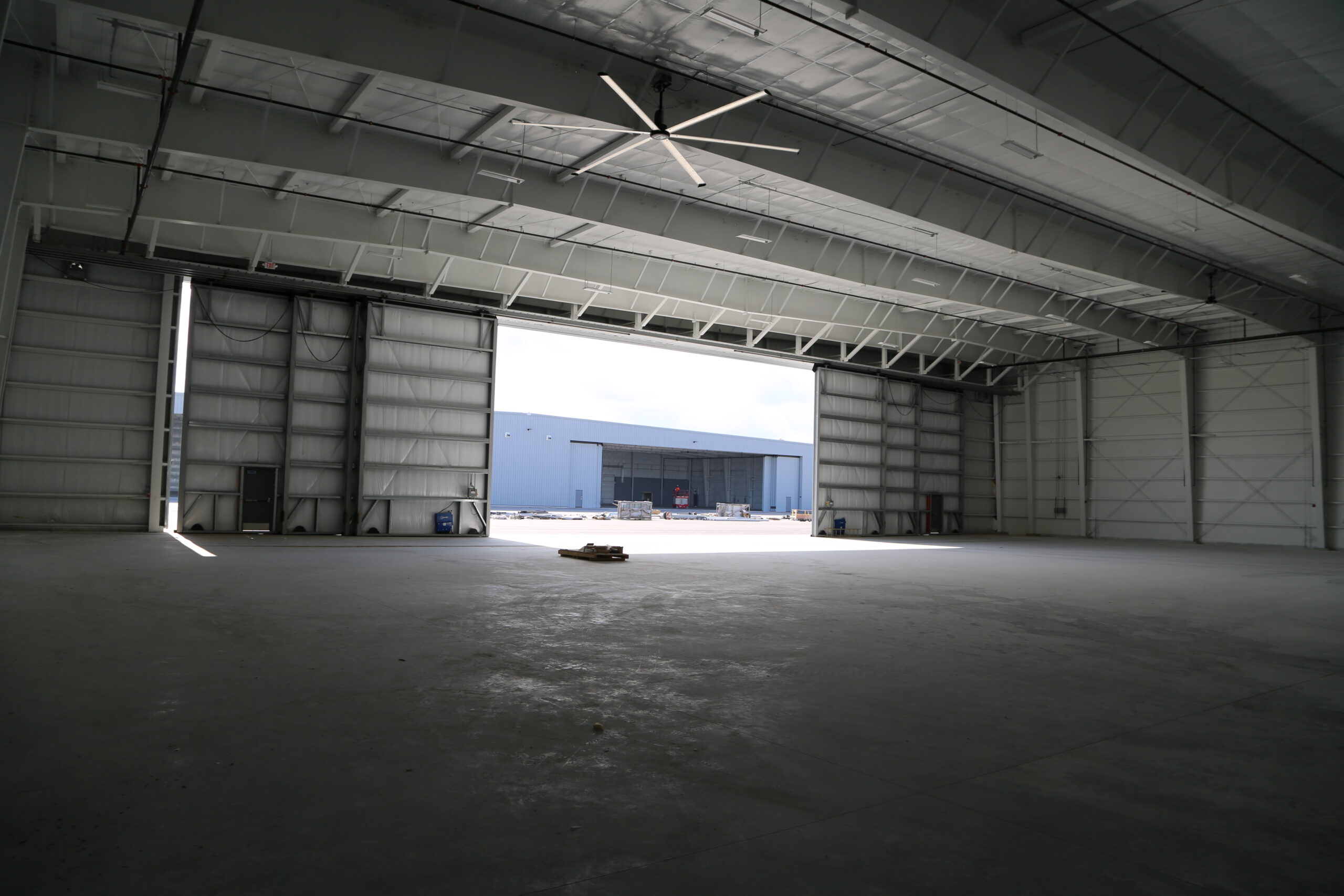
For Sky Harbour, our team installed three large bi-parting rolling hangar doors, each designed with an eight-panel configuration to accommodate wide-span openings. These doors operate entirely side-to-side along the track, with no outward motion, making them ideal for high-traffic hangar applications where controlled movement and space efficiency are critical.
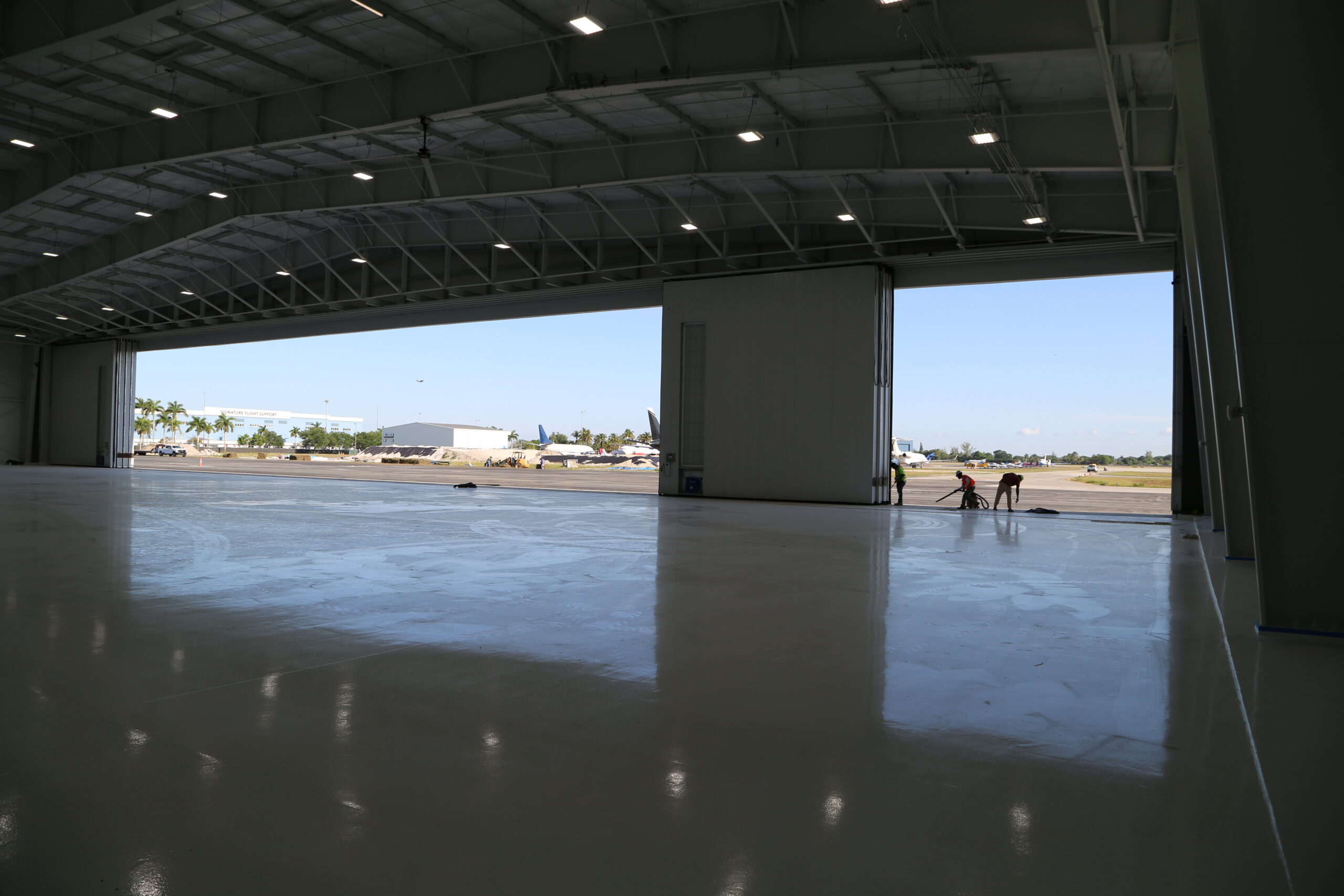
Because these are bi-parting rolling hangar doors, each side of the door system operates independently and moves toward the center opening. The panels cannot travel from one end of the building all the way to the opposite side—instead, each side opens toward the middle where the bi-parting split occurs. This design allows for controlled opening while maintaining structural balance across the system.
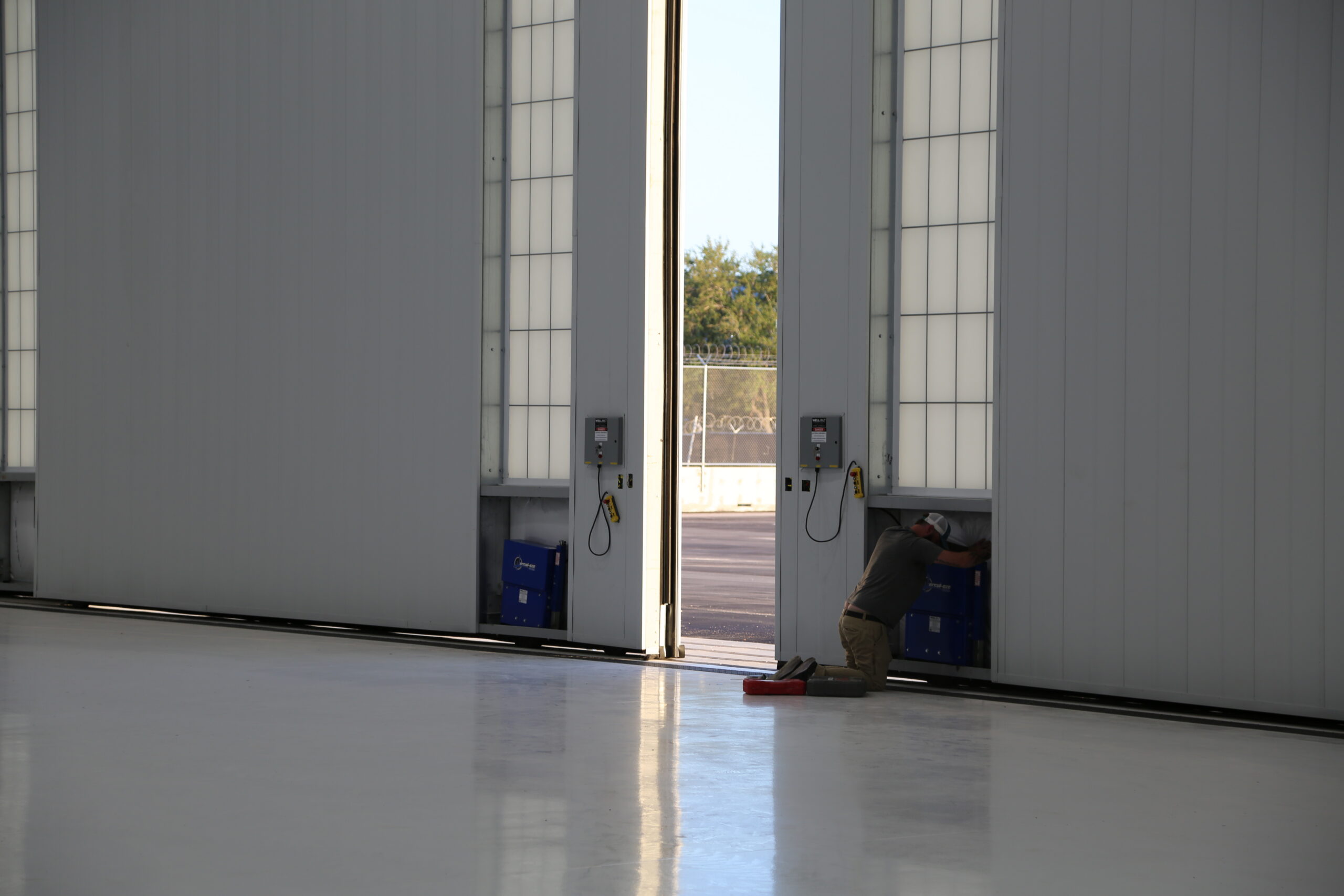
Each Sky Harbour door was equipped with four Hercul-Eze traction-drive operators, not just for power, but for flexibility in how the doors can be used. The system was intentionally designed so that the operators do not all run simultaneously, allowing for staged and selective movement depending on operational needs.
The center-mounted operators are used to shift door panels left or right within their respective side of the opening, while the end-mounted operators move panels from the wall toward the center. This phased operator configuration allows users to open only specific sections of the door rather than the entire system.
In real-world operation, this provides a major advantage. For example, if multiple aircraft are positioned in front of the hangar and a single jet needs to be accessed—especially one located near the wall—operators can open just one panel or a small section of panels to create the necessary clearance. There is no need to fully open both sides of the bi-parting door, which improves efficiency and reduces unnecessary movement.
The system also includes catch plates that allow multiple panels to engage and move together in unison. Depending on the situation, operators can move a single panel, multiple panels, or stack panels within each side of the bi-parting system. As shown in operation, one side of the door can be fully stacked toward its end while the opposite side remains partially open, giving operators precise control over how much of the opening is used.
This level of control is especially valuable in busy aviation environments where efficiency, speed, and precision are critical. By allowing partial openings and controlled panel stacking within each side of the door, the system reduces cycle time, minimizes wear, and improves overall workflow inside the hangar.
In addition to the Sky Harbour installation, we also completed a separate project at Opa-Locka Airport for Skybridge. This project included eight bi-parting rolling hangar doors installed across four hangars, with each door also featuring an eight-panel design. These systems were configured with two Hercul-Eze operators per door, providing efficient and reliable side-to-side movement while meeting the operational needs of the facility.
In bi-parting rolling hangar door systems, operator configuration is critical to performance, flexibility, and long-term durability. Because each side of the door moves independently toward the center, proper coordination of panel movement and load distribution is essential.
The multi-operator configuration used for Sky Harbour allows for phased movement, selective opening, and controlled stacking within each side of the door system. This reduces mechanical strain, improves alignment, and allows operators to move only the panels needed for a specific task.
In contrast, the two-operator configuration used for Skybridge provides a streamlined and efficient solution for facilities with different operational demands. When properly engineered, this setup still delivers smooth, reliable horizontal movement while maintaining a simpler system design.
There is no one-size-fits-all solution when it comes to rolling hangar door systems. The correct operator configuration depends on door size, panel count, and how the facility operates on a daily basis. By designing each system around real-world use, we ensure optimal performance, reduced maintenance, and long-term reliability.
Completing multiple hangar door installations at a major aviation hub like Opa-Locka Airport required precise coordination, detailed planning, and a strong focus on performance. From system design to final testing, our team ensured each installation met the expectations of both Sky Harbour and Skybridge.
With all systems now fully operational, both facilities benefit from high-performance rolling hangar doors designed for smooth horizontal movement, flexible operation, and long-term durability.
If your project requires bi-parting rolling hangar doors or a custom operator configuration built for real-world efficiency, our team specializes in engineered solutions designed for demanding aviation environments. Contact us to discuss your next hangar door system.