
Published: October 1, 2025 | By: Mark MacDonald
Selecting the right hangar door system is more than a structural decision – it’s a long-term investment in safety, performance, and operational efficiency. Whether you’re managing an aviation facility, defense installation, or industrial plant, the right door solution must align with how your organization works day-to-day. From clear openings to climate control, every factor plays a role in ensuring your doors enhance – not hinder – your workflow.
At Well Bilt Industries, we engineer and manufacture custom hangar doors built around the unique requirements of each industry we serve. Here’s how to evaluate your options and make the right call for your facility.
Different industries demand different performance priorities. A corporate aviation hangar focuses on aesthetics and smooth, quiet operation. A military base may prioritize rugged reliability, blast resistance, and rapid response times. Industrial facilities often need large, unobstructed openings to move oversized equipment efficiently.
Ask yourself:
Answering these questions early helps determine the best door type, materials, and drive system for your application.
Hydraulic doors are ideal for operations requiring maximum clear opening height and minimal headroom. With a single-piece design and powerful cylinders, they provide excellent weather sealing and reliability in both aviation and industrial settings.
Bi-fold hangar doors fold vertically and lift upward with cables or straps, making them perfect for tall, wide openings where side space is limited. They’re known for smooth operation and adaptability to existing structures.
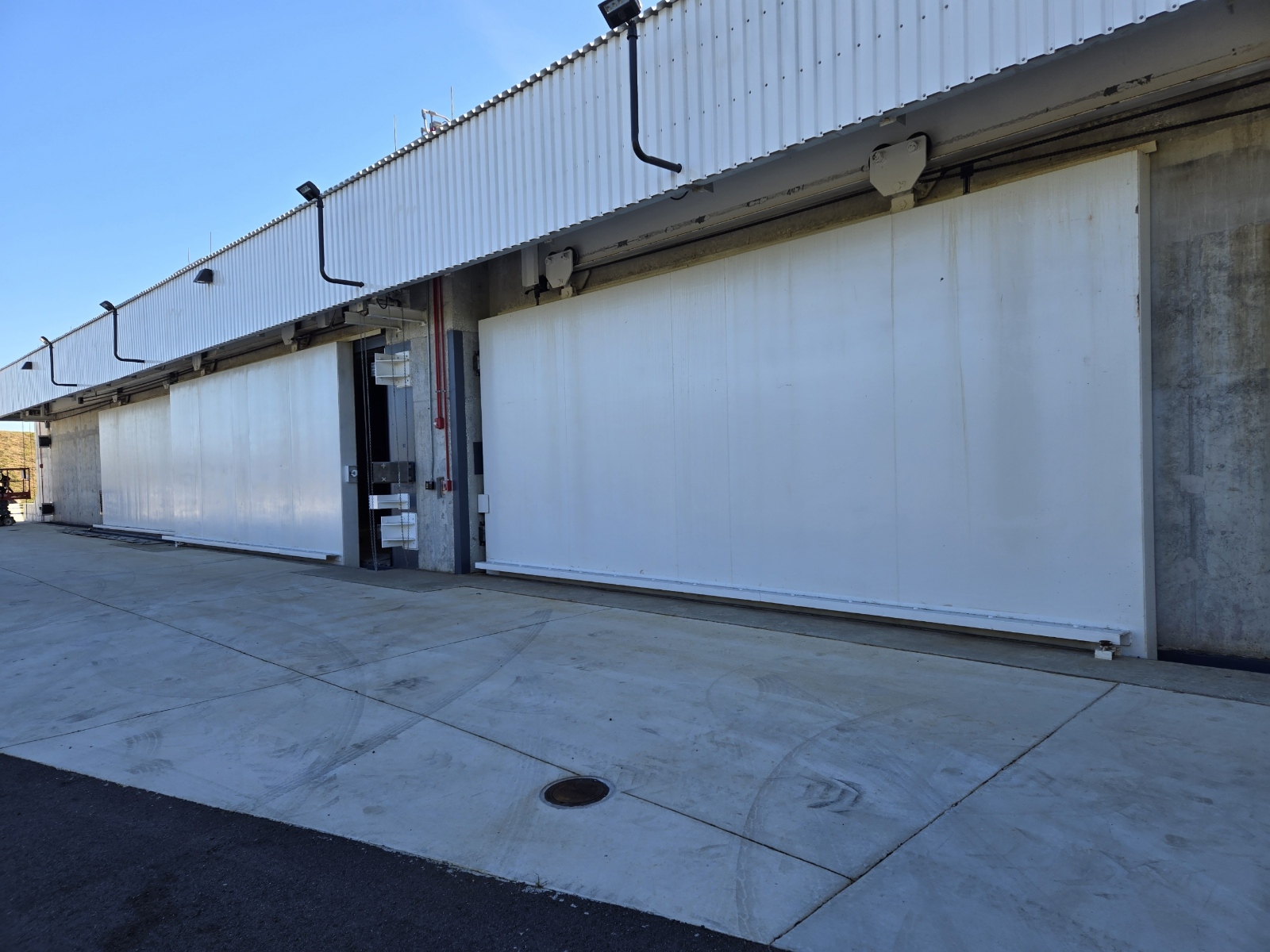
Sliding doors excel in multi-bay MRO environments and large commercial installations where multiple openings need to operate independently. They can be configured as single panels, telescoping leaves, or multiple sections.
Every hangar or industrial facility faces regional demands – from hurricane wind loads in Florida to snow and ice buildup in northern climates. Selecting a door that’s properly engineered for your location ensures long-term durability and compliance with building codes.
At Well Bilt Doors, our engineering team provides full wind-load and structural calculations for each installation. We fabricate all major components in-house and design systems to meet or exceed ASCE 7, NFPA, and IBC standards.
Modern hangar doors go beyond mechanical design. Integrated PLC-based control panels, limit switches, and photo-eye sensors ensure precision and safety during operation. For high-traffic or mission-critical environments, options like remote controls, interlocks, and alarm beacons improve workflow and reduce downtime.
When evaluating manufacturers, look for:
Even the best-engineered doors need periodic maintenance. Partnering with a manufacturer that offers preventive maintenance programs, parts support, and nationwide service ensures your investment stays productive. Well Bilt Industries provides lifecycle support for hydraulic, bi-fold, and bottom-rolling hangar doors, with technicians trained to diagnose and repair all major models.
Every hangar and industrial door project begins with precise measurement and consultation. Choosing an experienced partner ensures that your system is custom-fabricated to meet exact load, clearance, and control requirements – not forced into a one-size-fits-all solution.
At Well Bilt Industries, we design, engineer, and manufacture each door from the ground up. Whether you need a hydraulic hangar door for a private airpark, a bi-fold door for an MRO facility, or a custom industrial door for a manufacturing site, our team provides the expertise and fabrication quality to deliver reliable performance for decades.
Choosing the right hangar door system comes down to understanding your environment, usage patterns, and long-term goals. With the right engineering partner, you’ll not only gain a door that fits your structure – you’ll gain a system that supports your entire operation safely, efficiently, and for the long haul.
Looking for expert guidance? Contact Well Bilt Industries for a consultation on designing and fabricating the ideal hangar door for your facility.

About the Author
Mark MacDonald
Mark MacDonald, a University of Mississippi graduate, is the Owner and CEO of Well Bilt Industries, a leader in aircraft hangar door manufacturing for nearly 40 years. Under his leadership, the company has expanded from bottom rolling hangar doors to include bifold and single panel hydraulic doors. Mark’s focus on quality has propelled WELL BILT into agriculture, marine, industrial, and residential markets, with all products manufactured using high-quality steel and UL-listed parts at their Ocala, Florida facility.